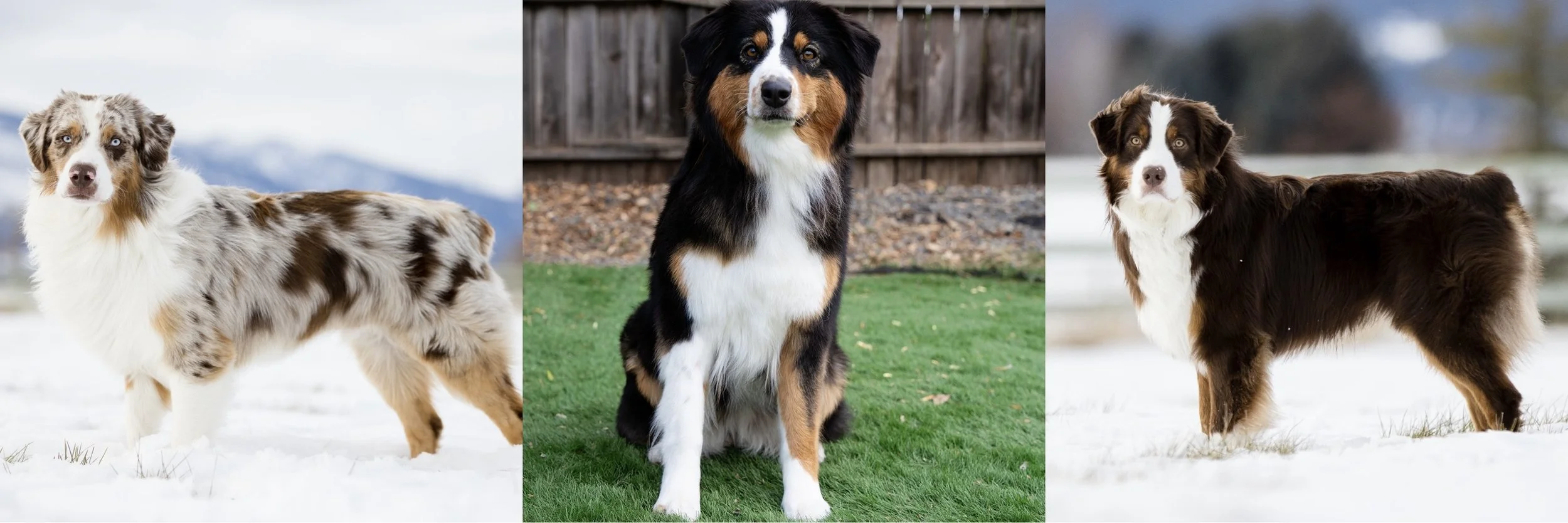
About the Australian Shepherd
The Australian Shepherd
The Australian Shepherd, affectionately known as the "Aussie," is an intelligent, athletic, and devoted herding breed that has earned a reputation as one of the most versatile dogs in the world. Originally developed to work livestock, the Australian Shepherd is equally at home on a ranch, competing in canine sports, hiking mountain trails, or relaxing with its family after a day of activity.
Known for their beautiful coats, expressive eyes, and eager-to-please personalities, Australian Shepherds thrive when they are included as active members of the family. They are loyal companions that form strong bonds with their owners and enjoy having a purpose every day.
Whether you are considering adding an Australian Shepherd to your family or simply want to learn more about this remarkable breed, understanding their history, temperament, care requirements, and health needs is the first step toward responsible ownership.
History of the Australian Shepherd
Despite the name, the Australian Shepherd was developed in the United States. During the 1800s, ranchers in the American West worked with shepherds who had traveled through Australia with Merino sheep. As a result, these hardworking dogs became associated with Australia, even though the breed itself was refined in America.
Selective breeding focused on intelligence, endurance, agility, and a natural instinct for herding livestock. These qualities made Australian Shepherds indispensable partners on farms and ranches across the country.
Today, the breed continues to excel in herding while also thriving in agility, obedience, rally, scent work, dock diving, search and rescue, therapy work, and as loyal family companions.
Australian Shepherd Temperament
Australian Shepherds are highly intelligent, affectionate, and eager to work alongside their people. They thrive on companionship and enjoy being involved in everyday family life.
They are naturally observant and may be somewhat reserved around unfamiliar people, but they should never be fearful or aggressive when properly socialized.
Because they were bred to think independently while managing livestock, Australian Shepherds enjoy learning and solving problems. Positive reinforcement training helps them develop into confident, well-mannered adults.
Are Australian Shepherds Good Family Dogs?
Yes—Australian Shepherds can make wonderful family dogs for households that understand the breed's exercise and mental stimulation needs.
They are often gentle and playful with respectful children and usually enjoy participating in family activities. Early socialization and supervision around young children help build positive relationships.
Their loyalty and affectionate nature often make them deeply connected to every member of the family.
Exercise Requirements
Australian Shepherds are an active breed that requires daily exercise and mental enrichment.
A healthy adult typically benefits from:
Physical activity each day
Daily walks or runs
Hiking adventures
Obedience training
Puzzle toys
Fetch and interactive games
Agility or other dog sports
Meeting both their physical and mental needs helps prevent boredom and encourages a happy, well-balanced companion.
Grooming
Australian Shepherds have a medium-length, weather-resistant double coat that protects them in a variety of climates.
Routine grooming includes:
Brushing regularly
Extra brushing during seasonal shedding
Nail trimming
Ear cleaning
Dental care
Occasional bathing as needed
Regular grooming not only keeps the coat looking beautiful but also supports overall skin and coat health.
Breed Size
Australian Shepherds are medium-sized dogs with a balanced, athletic build.
Height
Males: 20–23 inches (51–58 cm)
Females: 18–21 inches (46–53 cm)
Weight
Males: 50–65 pounds (23–29 kg)
Females: 40–55 pounds (18–25 kg)
Healthy weight varies depending on structure, genetics, and activity level.
Coat Colors
Australian Shepherds are recognized in four primary coat colors:
Black
Red
Blue Merle
Red Merle
Each color may appear with white markings, copper points, or both, making every Australian Shepherd unique.
Eye color can range from brown, blue, amber, or combinations of these colors, including marbled or split-colored eyes.
Health
Like all breeds, Australian Shepherds may be predisposed to certain inherited conditions. Responsible breeders perform health testing to reduce the likelihood of passing hereditary diseases to future generations.
Health screenings may include evaluations for:
Hip dysplasia
Elbow dysplasia
Hereditary eye diseases
Progressive Retinal Atrophy (PRA)
Cataracts
MDR1 genetic mutation
Other breed-specific inherited conditions
Choosing a breeder who prioritizes health testing and thoughtful breeding practices helps give puppies the best possible start in life.
Is an Australian Shepherd Right for You?
An Australian Shepherd may be an excellent fit if you:
Enjoy an active lifestyle
Want a highly trainable companion
Have time for daily exercise and training
Appreciate an intelligent, people-oriented dog
Are committed to lifelong learning and enrichment with your dog
This breed may not be ideal for someone seeking a low-energy or independent pet, as Australian Shepherds thrive when they have both physical activity and meaningful interaction with their families.
Why Responsible Breeding Matters
Responsible breeding is about far more than producing beautiful puppies. It means carefully selecting breeding dogs based on health, temperament, structure, and sound genetics with the goal of improving the breed for future generations.
Well-bred Australian Shepherds should possess stable temperaments, sound bodies, and the intelligence and versatility that have made the breed so beloved.
Learn More
If you're considering adding an Australian Shepherd to your family, we invite you to explore the rest of our website. Learn about our breeding program, meet our dogs, view available puppies, and discover the care and dedication that goes into raising healthy, well-socialized Australian Shepherds.
Responsible Breeding and Our Commitment to Every Puppy
One of the most common misconceptions about dog breeding is that responsible breeders contribute to the number of dogs in animal shelters. In reality, ethical and responsible breeders work hard to ensure that the puppies they produce never become part of the shelter population.
For us, breeding is a lifelong commitment—not just until a puppy goes home, but for the entirety of that dog's life.
A Lifetime Commitment
When one of our puppies joins a family, our responsibility doesn't end. We remain a resource for our puppy families throughout the dog's life, offering guidance on training, nutrition, health, and behavior whenever needed.
Life can be unpredictable. Changes in health, family circumstances, employment, or housing can sometimes make it impossible for an owner to keep their dog. If that ever happens, we want our puppy owners to know they are never alone.
Every puppy we breed has a home with us for life.
We Always Welcome Our Dogs Back
If an owner can no longer care for one of our Australian Shepherds, we ask that they contact us first.
Whenever possible, we will:
Welcome the dog back into our care.
Assist in finding an appropriate new home.
Carefully screen potential adopters.
Ensure the dog is placed in a safe, loving environment.
We never want one of our dogs to be surrendered to a shelter or sold without careful consideration.
This commitment is part of our responsibility as breeders and reflects the promise we make to every puppy we bring into the world.
Responsible Breeding Begins Before Puppies Are Born
Ethical breeding involves much more than producing puppies. Every breeding decision should be made with the goal of improving the breed while prioritizing the health, temperament, and well-being of each dog.
Responsible breeders typically:
Perform appropriate health testing on their breeding dogs.
Carefully evaluate temperament and structure.
Raise puppies in a clean, nurturing environment.
Provide early socialization and enrichment.
Educate prospective owners about the breed.
Carefully screen families to help ensure a good match.
Offer ongoing support after puppies go home.
Remain responsible for every puppy throughout its lifetime.
These practices help set both puppies and their families up for long-term success.
Preventing Shelter Surrenders Starts With Education
One of the best ways to prevent dogs from entering shelters is to place them in homes that are well prepared for the responsibilities of ownership.
We spend time getting to know each prospective family because we believe that choosing the right puppy is about more than availability. It's about finding the right fit for both the family and the puppy.
We encourage questions, provide honest information about the Australian Shepherd breed, and strive to ensure that every family understands the exercise, training, grooming, and time commitment these dogs require.
An informed owner is more likely to have a successful, lifelong relationship with their dog.
A Commitment That Lasts a Lifetime
Every puppy deserves a safe, loving, and permanent home. While we hope each of our puppies stays with its original family for life, we recognize that unexpected circumstances can arise.
Our commitment is simple: if one of our dogs ever needs us, we will be there.
Responsible breeding means accepting lifelong responsibility for every puppy we produce. It means standing behind our dogs, supporting our families, and doing everything we can to ensure that our Australian Shepherds are loved, cared for, and never without a place to call home.
We are proud to make that commitment, and we believe it is one of the defining responsibilities of an ethical breeder.
Australian Shepherd Frequently Asked Questions
Do Australian Shepherds shed?
Yes. Australian Shepherds have a double coat and shed year-round, with heavier shedding during the spring and fall. Regular brushing helps reduce loose hair and keeps the coat healthy.
How much exercise does an Australian Shepherd need?
Most healthy adult Australian Shepherds need at least one to two hours of physical activity each day, along with mental stimulation such as training, puzzle toys, or dog sports.
Are Australian Shepherds good with children?
Yes. Australian Shepherds are generally affectionate and loyal with children when they are properly socialized and children are taught to interact respectfully with dogs. Adult supervision is always recommended around young children.
Are Australian Shepherds good with other dogs?
Most Australian Shepherds get along well with other dogs when introduced properly and socialized from an early age.
Can Australian Shepherds live with cats?
Many Australian Shepherds can live peacefully with cats, especially when raised together. Because they have natural herding instincts, early introductions and consistent training are important.
Are Australian Shepherds easy to train?
Yes. Australian Shepherds are considered one of the most trainable dog breeds. They learn quickly and are very eager to please.
Do Australian Shepherds bark a lot?
Australian Shepherds may bark to alert their owners, communicate, or express excitement. Proper training, exercise, and mental stimulation help prevent excessive barking.
How big do Australian Shepherds get?
Adult males generally stand 20–23 inches tall and weigh between 50–65 pounds. Adult females usually stand 18–21 inches tall and weigh between 40–55 pounds.
How long do Australian Shepherds live?
The average lifespan is 12–15 years, although many live longer with excellent nutrition, routine veterinary care, exercise, and responsible breeding.
Do Australian Shepherds require a lot of grooming?
They require moderate grooming. Brushing weekly helps remove loose hair, reduce tangles, and maintain a healthy coat.
Are Australian Shepherds hypoallergenic?
No. Australian Shepherds are not considered hypoallergenic and may not be suitable for individuals with dog allergies.
Are Australian Shepherds good for first-time dog owners?
They can be, provided the owner is committed to training, exercise, and learning about the breed. Their intelligence and energy require time and consistency.
Do Australian Shepherds need a fenced yard?
While a securely fenced yard is helpful, it is not absolutely required if owners are committed to providing daily exercise, structured activities, and supervised outdoor time.
What health testing should Australian Shepherd breeders perform?
Responsible breeders typically perform health screenings appropriate for the breed, which may include hip and elbow evaluations, and relevant genetic testing such as MDR1 and other inherited conditions.
Why choose a responsible breeder?
Responsible breeders prioritize health, temperament, structure, and lifelong support for their puppy families. They carefully plan each litter with the goal of producing healthy, well-adjusted Australian Shepherds that exemplify the breed.
What should I ask before buying an Australian Shepherd puppy?
Important questions include:
What health testing has been completed on the parents?
Can I meet the parents or see photos and information about them?
How are the puppies socialized?
What health guarantee is provided?
What vaccinations and veterinary care have the puppies received?
Will the breeder provide ongoing support after I take my puppy home?
Choosing a breeder who welcomes questions and provides transparent information helps set both you and your future puppy up for success.